
Most AI characters are a face looking for a reason to exist. I started Addi the other way round. I built the story first, then the woman who keeps getting into it.
On 19 October, Addi's Instagram had 496 followers. On 8 November it had 9,353, with 5.8 million views in the last 30 days and another 8,100 followers on Facebook. This is how she's built.
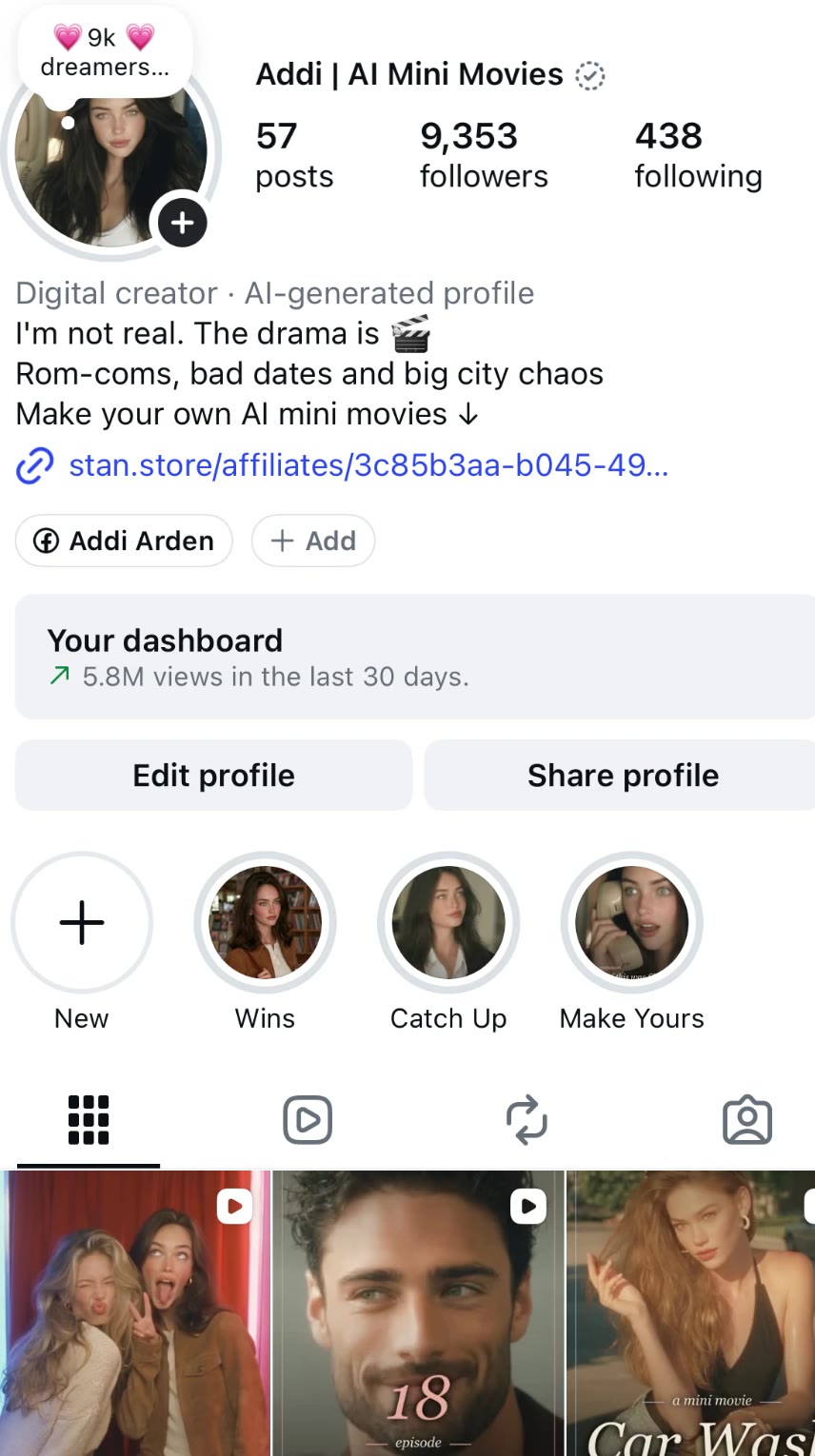
Addi's Instagram on 8 November
Start with the world, not the face
Addi lives in New York in 1998. That choice did more work than anything else I decided.
It gives every episode a look (warm, grainy, a little soft, like a film you watched on a Friday night), a set of props people haven't touched in years (answering machines, payphones, photo booths, video stores) and a genre everyone already knows how to read: the rom-com. The audience understands the rules before the first line is spoken, so 30 seconds is enough.
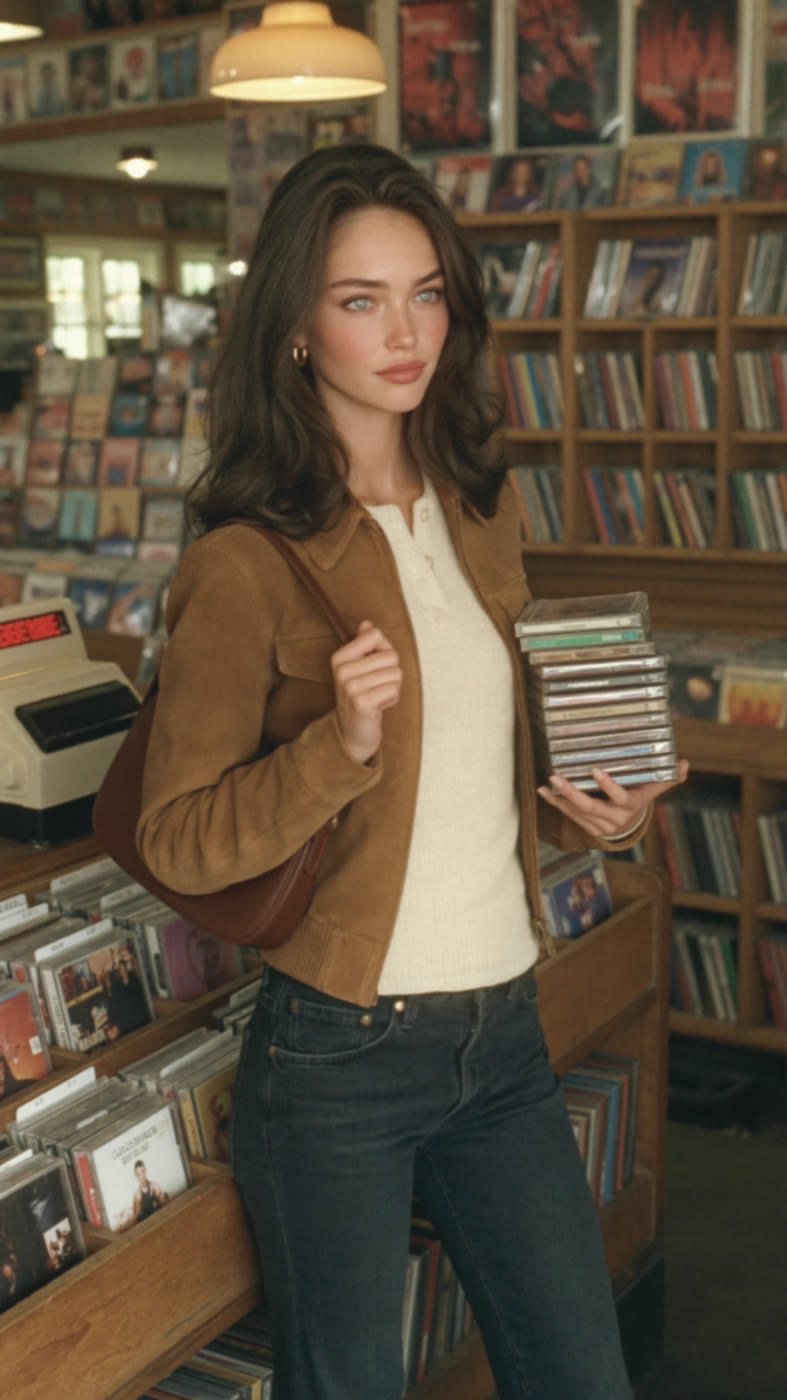
Addi's 1998: record stores, payphones, photo booths
A face on its own is a profile picture. A face in a world is a character.
Lock the character, then dress her
Addi has one reference face and one signature look: a cream cable-knit cardigan, very dark wavy hair, light blue eyes, freckles. Every still and every video starts from that reference, so she is the same woman in every episode.

The reference look: cream cardigan, dark waves, freckles
What changes is the wardrobe. Every episode gets its own outfit, written down and saved with the episode, so when a scene comes back the clothes come back with it. Consistency is what lets an audience recognise her in half a second. Variety is what stops them getting bored.
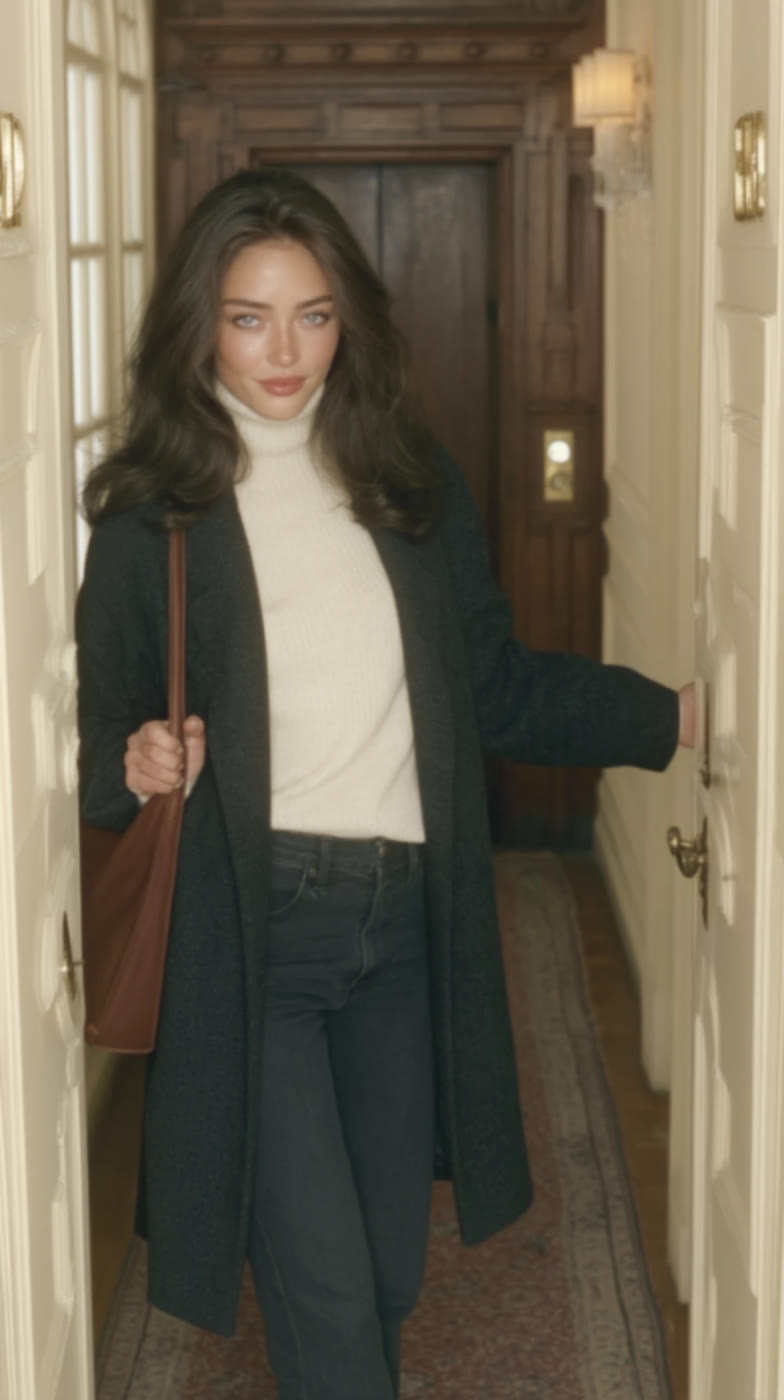
Same face, a new outfit for every episode
Give her people
Addi doesn't work alone, and neither does any good rom-com.
- Ben, across the hall in 4B. She left a love confession on his answering machine. He heard it through the door.
- Emily, the best friend, who bails at exactly the wrong moment.
- Eric, the actor off the VHS cover, who gave her his card "for the autograph".
- And a growing list of strangers who keep turning out to matter: the man whose coat she took home with his ring in the pocket, the guy who got shoved into her photo booth and kept the best frame.
Every character gets a face, a look and one line that sums them up, and the whole cast lives in one sheet so nobody drifts between episodes. When someone comes back, viewers who've been watching feel rewarded. New viewers don't need to know.
The episode rules
Every episode is 30 seconds, vertical, and stands on its own. On top of that I hold myself to four rules, most of them learned the hard way:
- Open mid-action. No establishing shots, no "so here's the thing". The first frame is already a scene.
- One big moment. A shove, a slammed door, a voicemail playing out loud. Something you'd describe to a friend.
- Pay it off, then leave a hook. The scene resolves, but there's a reason to want the next one.
- Know the platform. One episode with swearing did 84K views on Facebook and 28.9K on Instagram. Addi has about as many followers on each, so the same episode can land very differently, and I check both before calling anything a hit or a miss.
Episode nine, The Photo Booth, is the one that did all four best. It went out on a Sunday morning, had 166,413 views six hours later (99.9% of them from people who didn't follow her) and passed a million in about a day. It's on 4.9 million now.

The Photo Booth, with Emily
The account is part of the story
The Instagram profile isn't a noticeboard. It's the opening titles.
- The bio speaks in her voice: "I'm not real. The drama is 🎬".
- Followers are "dreamers", and the profile note counts them.
- Highlights work like a box set: Catch Up for new viewers, Wins for the big moments, Make Yours for people who want to know how it's done.
- Every so often a recap episode, "The Story So Far", retells the arc from one character's point of view, so anyone arriving mid-season can jump in. A Meet the Cast episode does the same for the people.
The aim is that a stranger who lands on one viral episode can understand the whole show from the profile in under a minute, and then follow.
Characters that can cross over
Alice & Homer is a studio, not a single account, and the test of a character is whether she can walk into someone else's story.
Raya is the other face of the studio. She has her own world and her own audience: pink bob, band tee, zero patience. Then she walked into Addi's 1998 as the girl behind the record store counter. Same face, same voice, a different decade. That episode got more comments than any before it, because people wanted to know who she was.
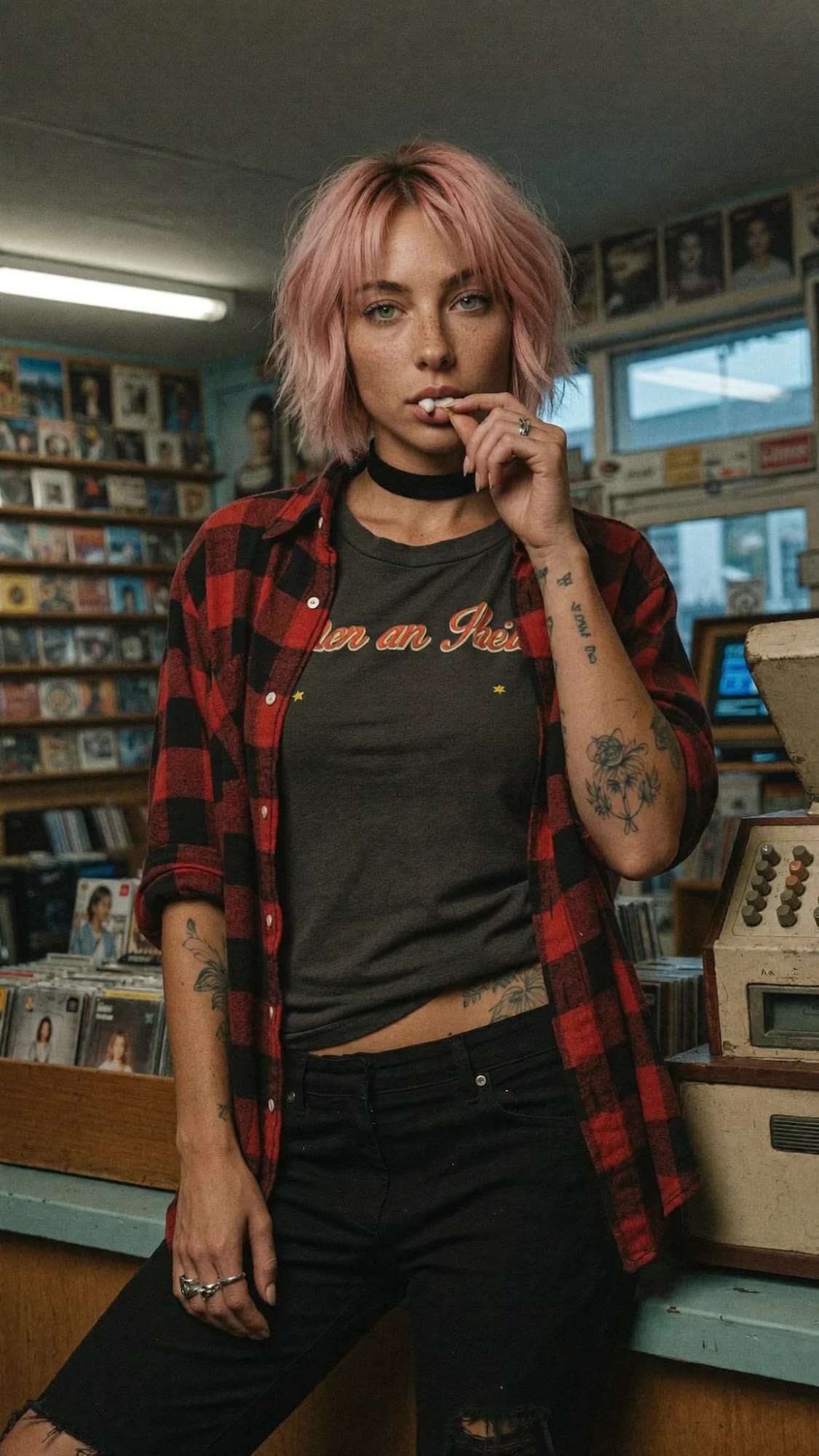
Raya in Addi's 1998
That's how I build every character: strong enough to carry their own series, consistent enough to cross into someone else's.
What the numbers taught me
- Wait 24 hours. Episode seven sat on 7 views at launch and was on 48,000 the next day. I don't judge an episode, or change the formula, until it's a day old.
- Retro props and holidays win. The photo booth, the payphone, a Halloween lobster costume and the Christmas specials all outperformed the regular episodes.
- Resolution matters less than story. I made episodes at 720p and 1080p side by side and saw no difference in watch time or reach.
What's next
More Addi, a Christmas season, and more characters joining the roster. If you're a platform, a brand or a fellow studio and you'd like to build something people binge, I'd love to talk.